

This Hue travel guide introduces the city’s most important attractions, cultural experiences, and local cuisine. It also provides practical tips for travelers who want to explore one of Vietnam’s most fascinating historical destinations.
Hue is one of the most historically significant cities in Vietnam. Located in central Vietnam along the Perfume River, the city once served as the imperial capital of the Nguyen Dynasty for more than a century. Today, Hue attracts travelers with its royal architecture, ancient temples, peaceful landscapes, and rich cultural traditions.
Unlike many modern cities, Hue retains a calm and reflective atmosphere. Its historical monuments, royal tombs, and pagodas create a unique cultural landscape that reveals the legacy of Vietnam’s imperial past.
Why Hue Is One of Vietnam’s Most Important Cultural Destinations
Hue is widely recognized as the cultural and historical heart of Vietnam. The city preserves many monuments that reflect the country’s imperial heritage and traditional architecture.
Visitors who come to Hue can experience a different pace of travel compared to other Vietnamese cities.
The Former Imperial Capital of Vietnam
Hue became the capital of Vietnam in the early nineteenth century under the Nguyen Dynasty. Emperors ruled the country from this city between 1802 and 1945.
During this period, grand palaces, temples, and ceremonial halls were constructed to reflect imperial authority and Confucian traditions.
Although some structures were damaged during conflicts in the twentieth century, many monuments have been restored.
Today, the imperial architecture remains a powerful symbol of Vietnam’s historical identity.
A City Recognized by UNESCO
Hue’s historical monuments form a large complex known as the Hue Monuments Complex. This site has been recognized as a UNESCO World Heritage Site because of its cultural and architectural value.
The complex includes the Imperial City, royal tombs, temples, and other historic buildings.
Visitors from around the world come to explore these remarkable landmarks and learn about Vietnam’s imperial history.
UNESCO recognition has also helped support conservation efforts across the city.
A Calm and Scenic Riverside City
Unlike the busy energy of larger Vietnamese cities, Hue offers a slower and more peaceful atmosphere.
The Perfume River flows gently through the city and connects many historical landmarks.
Tree-lined streets, quiet pagodas, and traditional gardens contribute to Hue’s relaxing environment.
Travelers often appreciate the opportunity to explore cultural sites while enjoying the natural scenery of central Vietnam.
Top Historical Attractions in Hue
Hue is best known for its impressive historical monuments. These sites reveal the power and sophistication of Vietnam’s imperial era.
Exploring these landmarks allows visitors to understand how the Nguyen emperors once governed the country.
The Imperial City: Heart of the Nguyen Dynasty
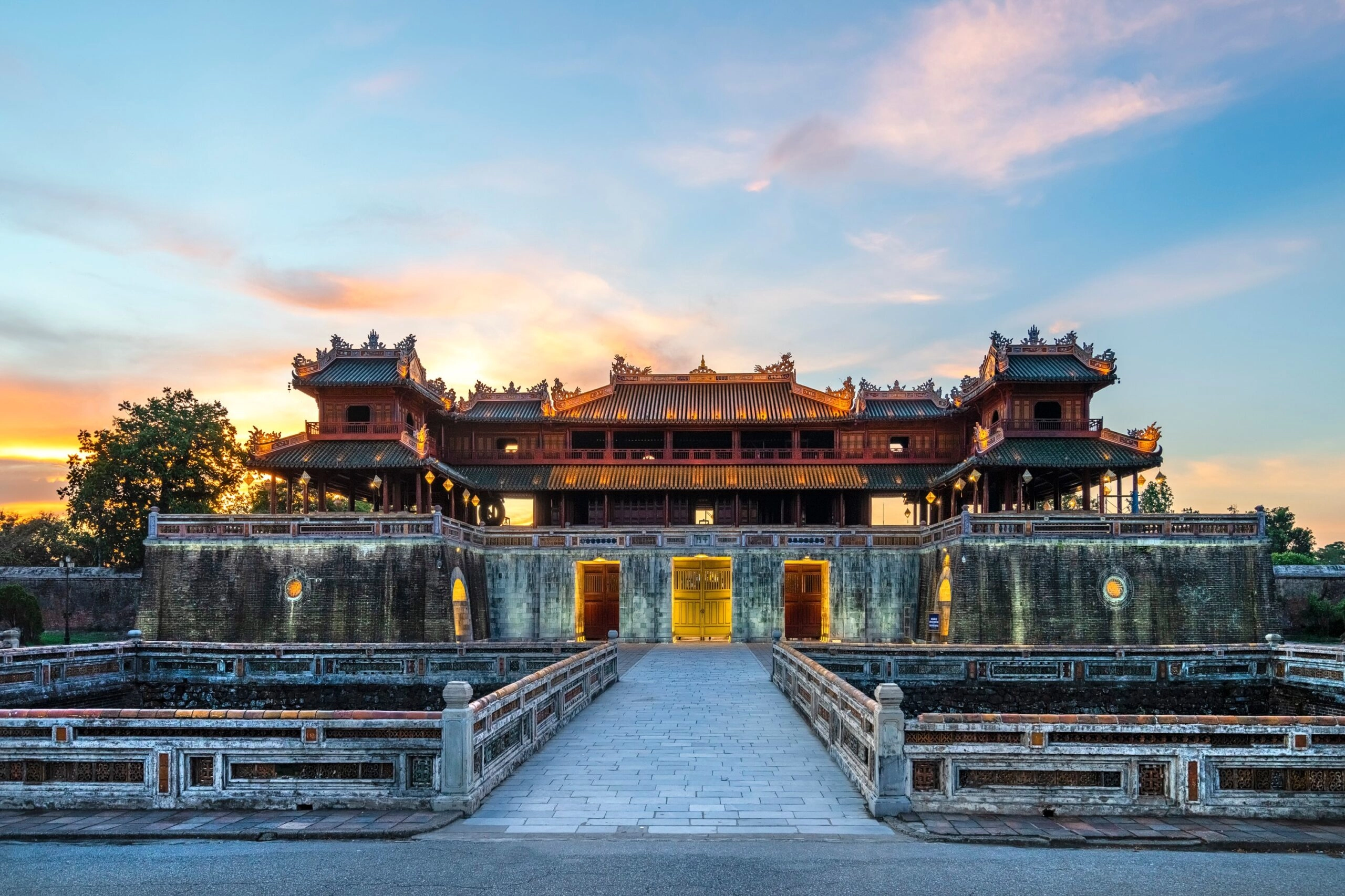
The Imperial City is the most famous attraction in Hue. This vast citadel once served as the political and ceremonial center of the Nguyen Dynasty.
Surrounded by massive stone walls and a protective moat, the complex contains palaces, temples, courtyards, and gardens.
The architecture was influenced by Chinese imperial design but also reflects Vietnamese artistic traditions.
Visitors enter through the impressive Ngo Mon Gate before exploring the inner courtyards.
Inside the complex, the Thai Hoa Palace stands as one of the most important ceremonial buildings.
Emperors once held royal meetings and important events in this grand hall.
Walking through the Imperial City offers a powerful glimpse into the life of Vietnam’s royal court.
Thien Mu Pagoda: Hue’s Most Iconic Religious Landmark
Thien Mu Pagoda is one of the most recognizable symbols of Hue. The pagoda stands on a hill overlooking the Perfume River.
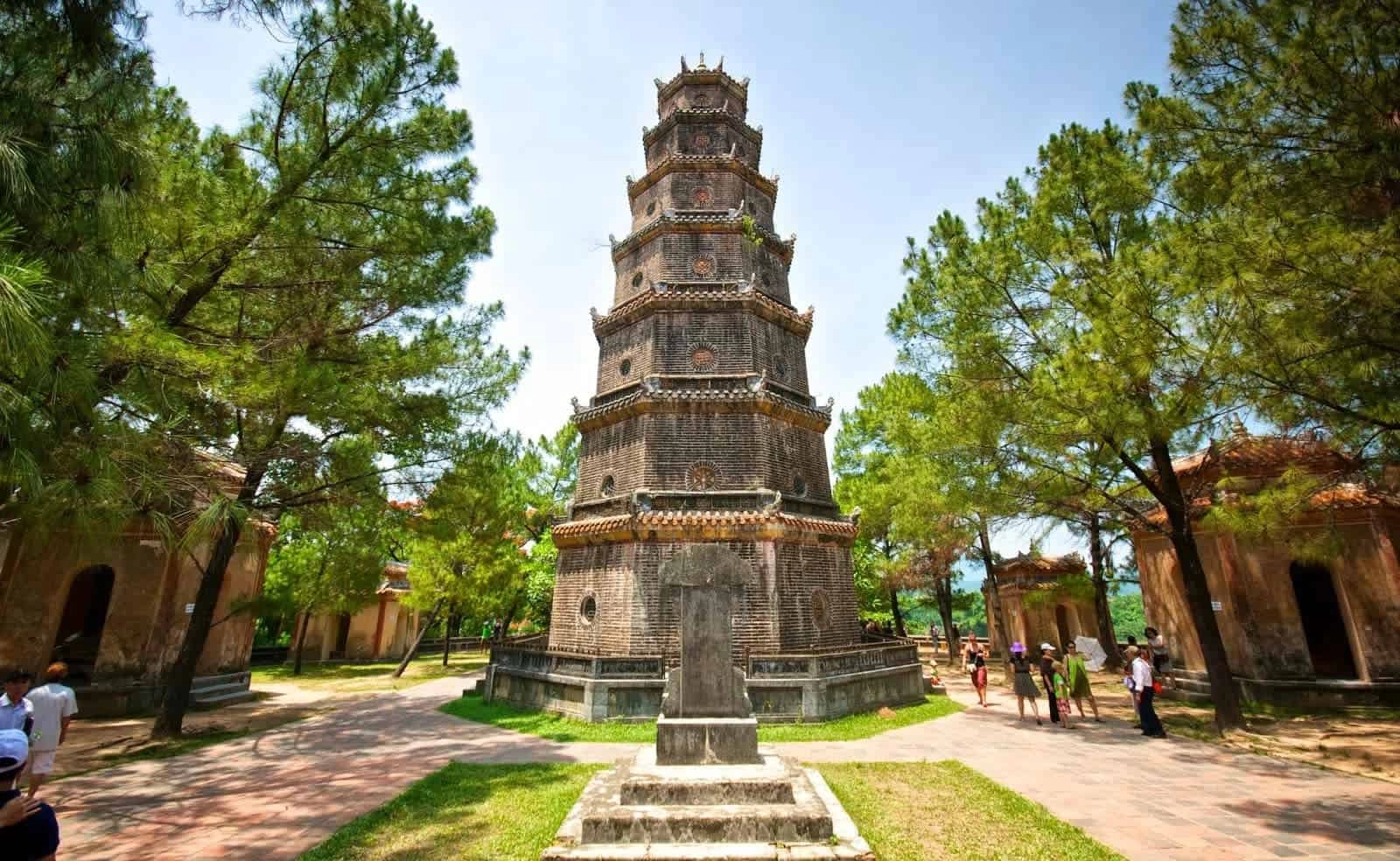
Its seven-story octagonal tower has become an iconic image of the city.
The pagoda dates back to the early seventeenth century and remains an important spiritual site.
Visitors can explore the peaceful temple grounds and admire traditional Vietnamese religious architecture.
Gardens, courtyards, and shrines surround the pagoda, creating a tranquil environment.
Many travelers visit at sunset when the golden light reflects on the Perfume River.
Royal Tombs of the Nguyen Emperors
The emperors of the Nguyen Dynasty constructed elaborate tomb complexes in the countryside around Hue.
These tombs were designed not only as burial places but also as symbolic representations of imperial philosophy.
Each emperor chose a different location and architectural style for his tomb.
As a result, the tombs vary greatly in design and atmosphere.
Some of the most visited tombs include the Tomb of Minh Mang, the Tomb of Khai Dinh, and the Tomb of Tu Duc.
Exploring these tomb complexes allows travelers to see how imperial beliefs influenced architecture and landscape design.
Alt text: Khai Dinh royal tomb architecture in Hue Vietnam
Dong Ba Market: Local Culture and Daily Life
Dong Ba Market is the largest and most famous traditional market in Hue.
Located near the Perfume River, the market has served local residents for generations.
Visitors can explore stalls selling fresh produce, seafood, clothing, handicrafts, and local snacks.
The lively atmosphere offers a glimpse into everyday life in Hue.
Many travelers also come here to sample authentic Hue street food.
Walking through Dong Ba Market provides an opportunity to experience local culture beyond historical monuments.
Alt text: Dong Ba Market street vendors and local food stalls Hue
Experiencing Hue’s Unique Cuisine
Hue is widely known for its distinctive cuisine. Many dishes originated in the royal court and later became part of everyday Vietnamese cooking.
The city’s food culture emphasizes balance, presentation, and flavor.
Bun Bo Hue: The City’s Signature Noodle Soup
Bun Bo Hue is one of Vietnam’s most famous noodle dishes. The soup features a rich broth made from beef bones, lemongrass, and spices.
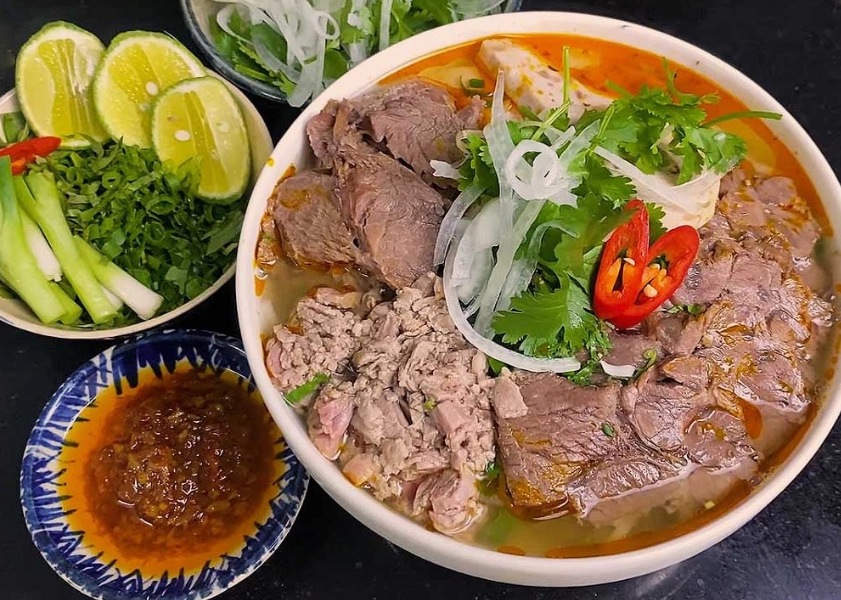
Rice noodles are served with slices of beef, pork, herbs, and chili paste.
The flavor is bold, slightly spicy, and deeply aromatic.
This dish originated in Hue and remains a highlight for food lovers visiting the city.
Many local restaurants specialize in traditional versions of Bun Bo Hue.
Banh Beo and Banh Nam: Traditional Hue Snacks
Hue cuisine includes many small dishes that were once served in the royal court.
Banh beo are small rice cakes topped with shrimp and crispy pork skin.
Banh nam are flat rice dumplings wrapped in banana leaves and filled with shrimp.
These dishes are usually served with fish sauce and fresh herbs.
Their delicate presentation reflects the influence of imperial culinary traditions.
Visitors often enjoy tasting several small dishes during a meal.
Royal Cuisine Inspired by Imperial Traditions
Hue’s royal cuisine is famous for its elaborate presentation and balanced flavors.
During the Nguyen Dynasty, palace chefs created hundreds of dishes for imperial banquets.
Some restaurants in Hue now recreate these historical meals for visitors.
These dining experiences allow travelers to explore the culinary traditions of Vietnam’s royal court.
Even modern restaurants often preserve elements of this elegant cooking style.
Cultural Experiences in Hue
Beyond its historical monuments, Hue offers many cultural experiences that reveal local traditions.
These activities help visitors connect with the city’s artistic and spiritual heritage.
Dragon Boat Cruise on the Perfume River
A dragon boat cruise along the Perfume River is one of the most relaxing ways to explore Hue.
Traditional boats carry visitors past pagodas, temples, and riverside villages.
Many tours stop at Thien Mu Pagoda or continue to the royal tombs outside the city.
Evening cruises sometimes include traditional music performances.
The calm waters and scenic views create a memorable cultural experience.
Alt text: dragon boat cruise on Perfume River Hue Vietnam
Traditional Hue Royal Court Music
Hue is the birthplace of Nha Nhac, the traditional royal court music of Vietnam.
This classical music was performed during imperial ceremonies and royal events.
Today, visitors can watch live performances in theaters or historical venues.
The music combines traditional instruments, singing, and elegant costumes.
Experiencing royal court music helps travelers understand the artistic traditions of Vietnam’s imperial culture.
Alt text: Vietnamese royal court music performance Hue
Visiting Traditional Craft Villages
Several craft villages near Hue preserve traditional Vietnamese handicrafts.
One famous example is the village of Thanh Tien, known for its colorful paper flowers.
Another well-known village specializes in incense making.
Visitors can observe artisans creating these handmade products using traditional techniques.
These villages offer insight into the craftsmanship that has supported local communities for generations.
Alt text: traditional incense sticks craft village near Hue
Best Time to Visit Hue
Hue experiences a tropical monsoon climate with distinct seasonal patterns.
Understanding the weather helps travelers plan their visit more comfortably.
Spring Season: February to April
Spring is considered one of the best times to visit Hue.
Temperatures are mild and rainfall is relatively low.
Flowers bloom across the city, creating colorful landscapes.
This season is ideal for sightseeing and outdoor exploration.
Summer Season: May to August
Summer in Hue can be hot and humid.
However, the sunny weather allows visitors to enjoy river cruises and scenic viewpoints.
Travelers should bring sun protection and stay hydrated during outdoor activities.
Early morning visits to historical sites are often more comfortable.
Rainy Season: September to January
The rainy season brings heavier rainfall and occasional flooding.
Despite the weather, Hue remains atmospheric during this time.
Mist over the Perfume River and quiet temples create a poetic setting.
Travelers who do not mind rain may enjoy a more peaceful experience.
How to Get to Hue
Hue is well connected to other cities in central Vietnam.
Several transportation options make it easy for travelers to reach the city.
Traveling by Air
Phu Bai International Airport is located about 15 kilometers from Hue city center.
Flights connect Hue with major cities such as Hanoi and Ho Chi Minh City.
From the airport, taxis and shuttle buses provide convenient transportation into the city.
Traveling by Train
The railway journey to Hue is considered one of the most scenic train routes in Vietnam.
Trains pass through coastal landscapes and mountain passes.
Many travelers enjoy taking the train from Da Nang or other cities along the central coast.
Traveling by Road
Hue is also connected to neighboring destinations by highway.
Travelers often combine Hue with visits to Hoi An and Da Nang.
The famous Hai Van Pass offers breathtaking coastal views during the journey.
Conclusion
Hue stands as one of Vietnam’s most culturally rich destinations. The city’s imperial citadel, royal tombs, temples, and traditional cuisine reveal a deep connection to the country’s history.
Visitors who explore Hue can experience both historical monuments and authentic local culture.
From walking through the Imperial City to cruising along the Perfume River, every moment in Hue offers a glimpse into Vietnam’s imperial past.
For travelers interested in culture, history, and architecture, Hue remains one of the most rewarding destinations in Vietnam.